Talk of AI infrastructure in Jamaica moved from conference panels to Cabinet this week, and the detail that matters most is the detail that is missing.
On Sunday 15 November 2026, speaking at the Jamaica Labour Party special delegates conference at the Montego Bay Convention Centre, Prime Minister Dr. Andrew Holness announced that the government has approved a memorandum of understanding with a group of investors to explore establishing artificial intelligence infrastructure on the island.
He framed it as a question of position rather than consumption, saying the intent is "so that Jamaica can have a footprint and not only be a consumer of the technology," and warning that "My friends, we cannot be left behind again."
We build AI systems for Jamaican businesses out of Montego Bay, about fifteen minutes from the room where that was said. So here is our reading, including the parts that are easy to skip past.
What was actually announced
An MOU has been approved. Not signed. Approved, to explore establishing AI infrastructure.
That is a real step and it is worth saying so plainly. A memorandum of understanding is how serious infrastructure conversations begin, and the government's AI task force is advising on what Jamaica needs to do to capitalise on the opportunity. Something is moving.
What was not announced
This is the part to hold onto, because the coverage will compress it out within a week:
- The investors were not named. The Prime Minister did not identify who the counterparties are.
- No value was disclosed. There is no figure attached to the proposed agreement.
- Data centres were not confirmed. He did not indicate whether the MOU involves AI data centres in Jamaica specifically.
- There is no timeline. Not for signing the MOU, and not for building anything.
None of that makes the announcement empty. It makes it early. The honest description is that Jamaica has opened a conversation, and the terms of that conversation are not public yet.
Why it still matters
Because the alternative is worse.
Every piece of AI a Jamaican business touches today runs on compute owned somewhere else, billed in US dollars, governed by somebody else's terms of service and somebody else's data residency rules. When the exchange rate moves, your costs move. When a provider changes its policy, your product changes with it. That is what being purely a consumer means in practice, and it is not an abstraction, it is a line item.
Infrastructure on the island would not fix all of that. It would change the negotiating position, and for a small economy the negotiating position is most of the game.
The gap nobody announces
Here is the uncomfortable part, and it has nothing to do with government.
If an AI data centre opened in Jamaica next year, the overwhelming majority of Jamaican businesses could not use it. Not because of cost or access, but because they have nothing to feed it.
We see this on every engagement. The sales history lives in a paper book under the counter. The customer list is a WhatsApp chat. Stock counts are in somebody's head. Three years of invoices are in a shoebox and a Gmail folder. Attendance is a signature in a ledger.
AI does not do anything useful with that. Models need structured, accessible, reasonably clean operational data, and most firms here do not have any. A business in that state will watch national AI infrastructure arrive and get exactly nothing out of it, the same way plenty of businesses watched fibre arrive and still run their accounts on paper.
Readiness is not something the government can announce on your behalf.
What to do before it arrives
If you run a business here and you want to be on the right side of this, the work is unglamorous and it starts now.
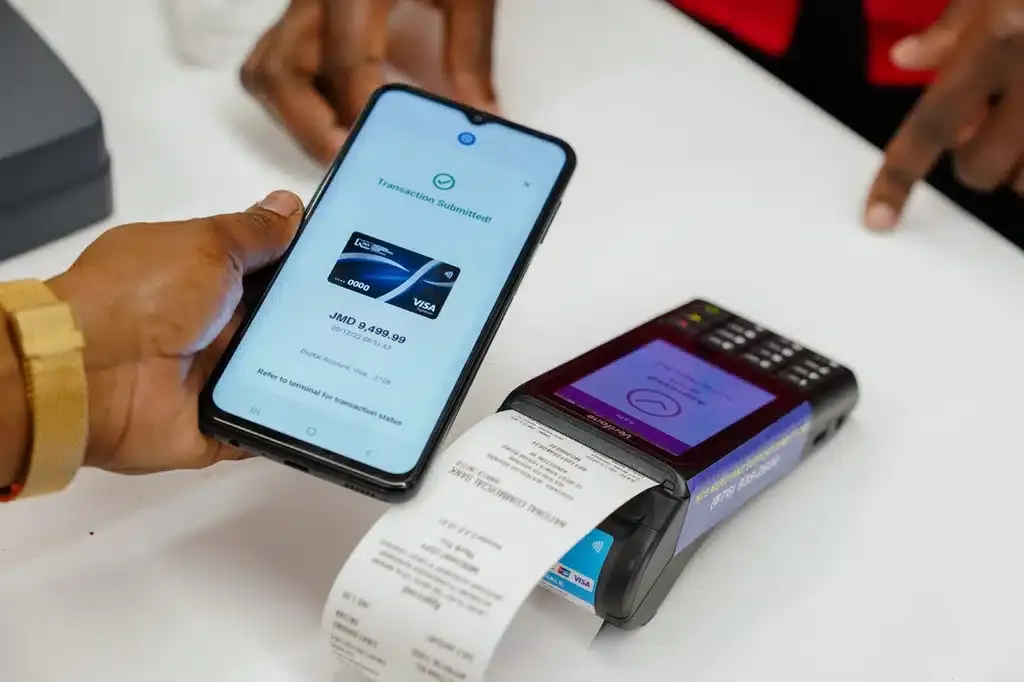
- Get your operations into a system, any system. A point of sale that records every line item. A CRM that holds every customer and every conversation. Attendance that is captured rather than signed. The specific software matters far less than the fact that the data exists in a form a machine can read.
- Stop throwing away history. Two years of transaction data is an asset. Most Jamaican businesses discard it by never capturing it in the first place. Start capturing now and in eighteen months you will have something worth modelling.
- Write down how your business actually decides things. Which customers get credit, how you price a job, when you reorder. Automation of any kind starts with rules somebody can state out loud. Most owners have never written theirs down.
- Automate one real process end to end. Not a chatbot bolted on the front of a website. One process that costs you hours every week, done properly, measured before and after. That is how you learn what this technology is actually good at, and the lesson is cheaper now than it will be later.
- Keep your data where you can move it. If your systems cannot export, you are not portable, and portability is the entire point of having local infrastructure as an option.
Do those and you are positioned whether the MOU is signed next quarter, next year, or never. Skip them and no amount of national infrastructure will reach you.
The Montego Bay detail
It is not nothing that this was said in Montego Bay rather than Kingston.
The second city carries the BPO sector, and the BPO sector is the part of the Jamaican economy most directly exposed to AI. Tens of thousands of jobs here sit in exactly the category that conversational AI is getting good at. Saying "And that is called the artificial intelligence revolution," in that building, to that audience, is a choice.
Whether the follow through matches the setting is the thing to watch.
Where we stand
We will take the announcement at face value: a serious intention, at an early stage, with the commercial terms still private.
What we are certain about is the other half. The businesses that benefit from AI infrastructure in Jamaica, if and when it exists, will be the ones whose operations were already running on systems that produce data. That work is available to any business on the island today, it does not require a memorandum of understanding, and nobody is going to announce it for you.